
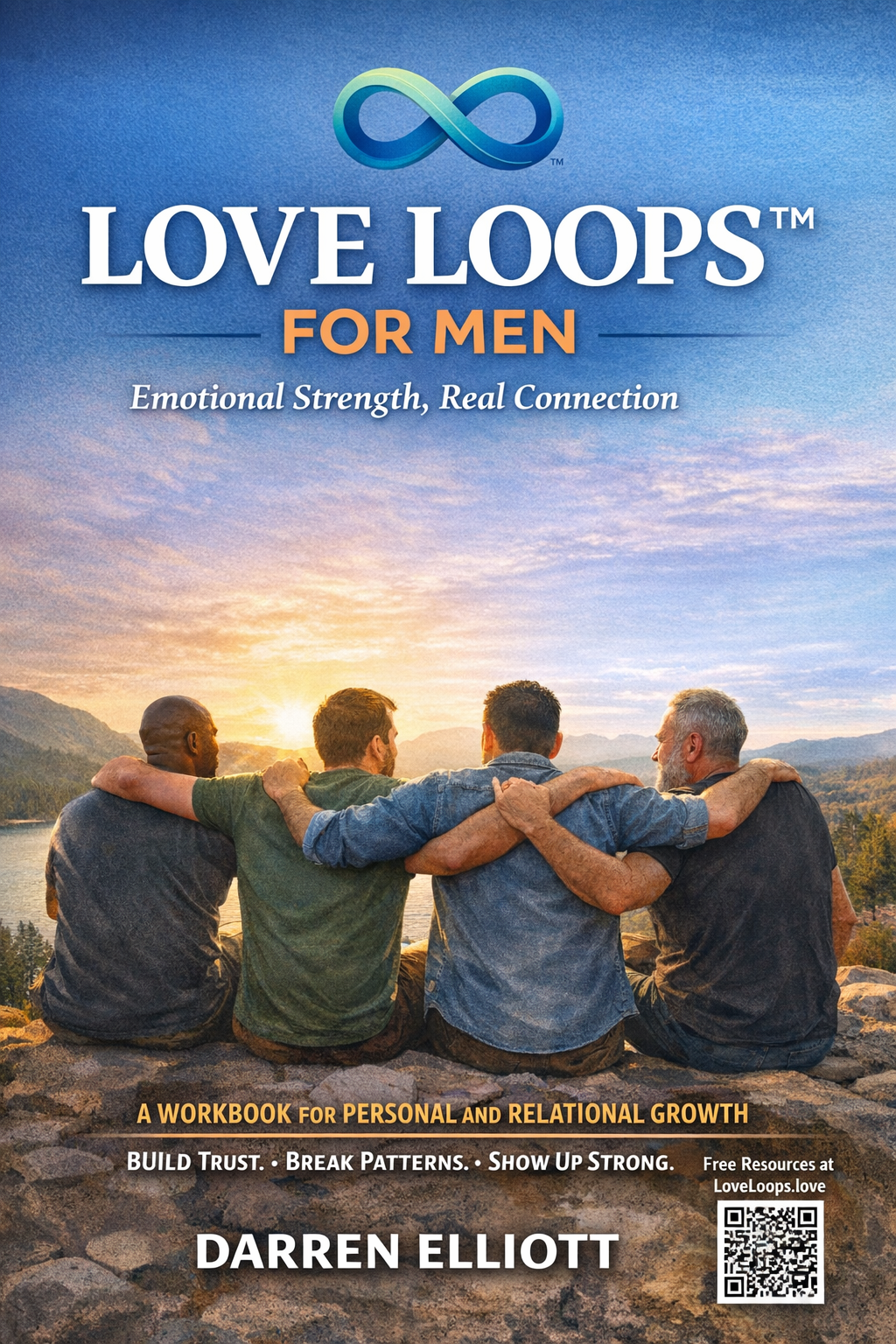
Emotional Strength Worksheets
Practical Love Loops™ Tools for Men — and the People Who Love Them
Emotional strength isn’t something you figure out alone.
It’s something you practice together.
This page gathers free Love Loops™ worksheets designed to help men build emotional maturity, nervous system regulation, and deeper connection — without shame, labels, or domination.
These tools are meant to be used:
with a partner
with friends
in men’s groups
in couples work
in community spaces
Because humans don’t heal in isolation.

Share this page
Learning emotional strength works better together.
Scan this code and invite someone to practice with you.
Share This With the Men in Your Life
Learning emotional strength works better when men learn together.
If this work resonates, invite others into it.
📱 Scan or share the QR code at the top of this page
and pass it along to:
friends
brothers
partners
group members
anyone who wants stronger relationships and a steadier inner life
This isn’t about calling anyone out.
It’s about calling each other in.
What These Worksheets Are (And Aren’t)
These worksheets are:
practical
body-based
relational
non-shaming
grounded in nervous system science
They are not:
personality labels
diagnoses
moral judgments
“fix-yourself” assignments
They help you learn how to:
notice what’s happening in your body
feel emotions without being overwhelmed
regulate fear instead of suppressing it
stay connected under stress
repair instead of withdraw or dominate
How to Use These Worksheets
There’s no right order.
Some people start alone.
Most benefit from practicing with others.
You might:
pick one worksheet and talk it through with a friend
use one as a weekly couples check-in
bring one into a men’s group
revisit the same worksheet multiple times
Emotional strength builds through repetition and relationship, not insight alone.
Emotional Strength Worksheets Collection
(This section grows over time)
You’ll find worksheets such as:
Emotional Strength ≠ Emotional Suppression
Reframing what strength actually looks like in the bodyFear, Courage, and the Nervous System
How to feel fear, regulate it, and act with integrity anywayControl vs Regulation
Why domination feels strong — and why regulation actually isWhy Emotional Avoidance Breaks Connection
Understanding the relational cost of not feelingFrom Disconnection to Repair
Learning how to come back instead of shutting down
Each worksheet stands on its own —
and together they build a Love Loops™ practice of emotional maturity.
A Love Loops™ Reminder
Emotional strength isn’t about becoming someone else.
It’s about becoming present.
And presence is how:
trust grows
intimacy returns
fear loosens
love stays online
Take what helps.
Practice together.
Come back often.
Love Loops™ for Men: Emotional Strength & Connection
A practical worksheet series for men who want better relationships, clearer emotions, and a life that actually feels good.
Why This Series Exists
Most men were never taught emotional skills.
They were taught to:
push through
stay strong
stay productive
stay in control
That works for survival.
It doesn’t work for connection.
This free Love Loops™ worksheet series was created to help men build emotional strength — not by becoming softer or weaker, but by becoming more regulated, more aware, and more connected to themselves and others.
What Love Loops™ Means
A Love Loop is a pattern where:
emotions are noticed
the nervous system is regulated
communication stays open
relationships feel safer and closer
A Fear Loop is what happens when:
emotions are ignored or suppressed
anger or shutdown takes over
people feel unsafe or unseen
connection breaks down
These worksheets teach you how to move from fear loops to love loops — in real life, one skill at a time.
Who This Is For
This series is for men who:
feel disconnected from their emotions
get angry, shut down, or go numb under stress
struggle in relationships without knowing why
want to be better partners, fathers, friends, and leaders
were never shown how emotional maturity actually works
You don’t need to be in therapy.
You don’t need to be “good with feelings.”
You just need to be willing to practice.
A Note for Men Who Were Taught Not to Feel
Many men were taught that:
fear is weakness
sadness is failure
emotions should be ignored
neutrality means strength
But when emotions are turned down, connection is turned down too.
You can’t choose which feelings to mute.
Learning to feel — and regulate — is not losing control.
It’s how you gain it.
Share This With Other Men
This work isn’t meant to be done alone.
Men regulate better in connection.
If this resonates, share it with:
a friend
a brother
a partner
a group of men who want to grow
You don’t need perfect words.
“Hey, this helped me — thought you might like it.”
That’s enough.
Share This With Other Men
This work isn’t meant to be done alone.
Men regulate better in connection.
If this resonates, share it with:
a friend
a brother
a partner
a group of men who want to grow
You don’t need perfect words.
“Hey, this helped me — thought you might like it.”
That’s enough.
How to Use This Series
You can start at Worksheet 1 and move through in order, or jump to the worksheet that fits what you’re dealing with right now.
You can work through these on your own, with a partner, or alongside other men — and you can come back to any worksheet as often as you need.
Each worksheet focuses on one practical emotional strength skill:
emotional awareness
regulation
communication
empathy
repair
connection
meaning
This series isn’t about fixing yourself.
It’s about learning skills most men were never taught.
Start where you are.
Move at your pace.
Come back when life calls for it.
→ View the Worksheets
1. Emotional Strength ≠ Emotional Suppression
Many of us were taught that strength means staying unaffected — not showing fear, sadness, or uncertainty. This worksheet gently challenges that belief and introduces a different definition of strength: the ability to stay present, regulated, and connected under pressure.
You’ll explore the difference between avoiding emotions and learning how to work with them, and how emotional suppression quietly disconnects us from ourselves and the people we love. This is a grounding place to begin if you’re new to emotional maturity work.
→ View Worksheet
2. Your Nervous System Is Not the Enemy
Emotions don’t start in the mind — they start in the body. This worksheet introduces the nervous system in clear, practical language and explains why stress, fear, and shutdown aren’t personal failures, but biological responses.
You’ll learn how your body signals safety and threat, and why learning to regulate your nervous system is the foundation of emotional strength, steady leadership, and healthy relationships.
→ View Worksheet
3. Regulation Before Expression
Strong emotions don’t require suppression — they require regulation. This worksheet focuses on learning how to pause, ground yourself, and settle your body before speaking or acting.
You’ll practice simple techniques that help you stay steady during difficult conversations, making it easier to communicate clearly without shutting down or lashing out. This is a powerful tool for anyone who wants to respond with intention rather than reaction.
→ View Worksheet
4. Feelings as Information, Not Weakness
Emotions carry information about our needs, boundaries, and values. This worksheet helps you learn how to notice and name emotions without being overwhelmed by them or judging yourself for having them.
By treating feelings as useful signals rather than problems to eliminate, you build clarity, self-trust, and better decision-making — especially in relationships.
→ View Worksheet
5. Vulnerability Is Courage
Vulnerability is often misunderstood as weakness. In reality, it’s the courage to be honest while staying grounded and regulated. This worksheet reframes vulnerability as a strength that deepens trust and connection.
You’ll explore what healthy vulnerability looks like, what it doesn’t, and how sharing your inner experience — thoughtfully and safely — strengthens relationships rather than threatening them.
→ View Worksheet
6. Empathy: A Skill You Can Practice
Empathy isn’t about agreeing or fixing — it’s about understanding. This worksheet introduces research-backed empathy practices that help you listen, stay curious, and respond with presence.
You’ll learn how empathy calms nervous systems, reduces conflict, and builds connection, even when there are differences in perspective or emotion.
→ View Worksheet
7. Practicing Perspective
When stress and fear rise, it’s easy to slip into black-and-white thinking. This worksheet helps you practice perspective-taking — the ability to hold more than one point of view at the same time.
By widening perspective, you create space for understanding, flexibility, and repair, especially in close relationships where differences can otherwise turn into distance.
→ View Worksheet
8. Compassion Without Losing Yourself
Compassion doesn’t mean self-erasure or ignoring boundaries. This worksheet explores how to practice compassion for others while staying grounded in your own needs and values.
You’ll learn the difference between compassion and enabling, and how kindness paired with clarity supports healthier, more respectful relationships.
→ View Worksheet
9. Working With Anger Without Acting It Out
Anger is a powerful signal — but acting it out often causes harm. This worksheet helps you understand anger as information, not a command.
You’ll practice ways to pause, regulate, and make values-based decisions, especially with people you care about. The focus is on choosing grace and accountability rather than suppression or explosion.
→ View Worksheet
10. Active Listening as Emotional Leadership
Being heard is one of the fastest ways to calm a nervous system. This worksheet focuses on active listening as a form of strength and leadership, not passivity.
You’ll practice listening skills that build trust, reduce defensiveness, and help others feel safe enough to stay connected — even during difficult conversations.
→ View Worksheet
11. Repair Over Withdrawal or Domination
All relationships experience rupture. What matters is repair. This worksheet teaches practical repair skills that help you come back after conflict instead of withdrawing, escalating, or dominating.
You’ll explore language and practices that rebuild trust and connection without shame or blame.
→ View Worksheet
12. Living Emotionally Awake
Emotional strength isn’t a one-time insight — it’s a daily practice. This final worksheet helps you integrate what you’ve learned into everyday life, relationships, and leadership.
You’ll reflect on how emotional presence shapes your home, community, and the people who learn from watching you live.
→ View Worksheet
13. Men, Friendship, and Loneliness
Strength was never meant to be practiced alone. This worksheet explores why so many men feel disconnected from other men — and how learning emotional presence creates trust, belonging, and real support.
You’ll reflect on friendship, vulnerability, and how connection between men strengthens families, relationships, and communities.
→ View Worksheet
14. Forgiveness Without Forgetting
Forgiveness isn’t about excusing harm — it’s about freeing yourself from carrying what no longer serves you. This worksheet helps you understand forgiveness as a strength that restores clarity, boundaries, and peace.
You’ll explore how letting go supports emotional regulation, healthier relationships, and personal leadership.
→ View Worksheet
15. Building a Life That Actually Feels Good
A good life isn’t just productive — it’s lived from the inside. This worksheet invites you to slow down and reflect on what truly brings meaning, connection, and fulfillment.
You’ll examine how emotional awareness shapes daily choices, relationships, and the kind of life you’re building over time.
→ View Worksheet
Emotional maturity isn’t about becoming someone else.
It’s about becoming more present — with yourself and with others.